

The Lost Sea, Sweetwater, TN
Updated: Oct 4
140 Lost Sea Road, Sweetwater, TN 37874
The Lost Sea is a Registered National Landmark and is open every day of the year except for Thanksgiving and Christmas Day. Call ahead for tour times and the shops that will be open.

Located 140 feet below the ground near the Smoky Mountains National Park and Cherokee National Forest is a geological mystery: The Lost Sea. What’s amazing about this site is that it’s not only an incredible natural wonder, but also a window into the deep past, Indigenous history and the Civil War! Some may see this as a tourist attraction, but in reality, anytime you have a cave and an underwater lake there are spiritual considerations as well. The Underworld awaits!
Officially, the Lost Sea is the largest underground lake in the United States and the world's second-largest, non-subglacial underground lake after Dragon's Breath Cave, in Namibia. Unofficially, it may even be the largest in the world because the full depth of the lake has never been measured. What you can see is approximately 800 feet long and 220 feet wide, but below the surface are a system of tunnels and flooded chambers that have defied measuring devices, and so the bottom of this mysterious lake has never been found!
It’s an adventure going into the caverns, making your way from chamber to chamber with your tour guide, learning about the history of the caverns and seeing their amazing geology, not to mention the boat ride around the 4 1/2-acre lake teaming with rainbow trout. All told, the tour took around an hour and 15 minutes, with lots of stops along the way to appreciate the natural beauty and learn about its mysteries. But why not share some of these with you now?


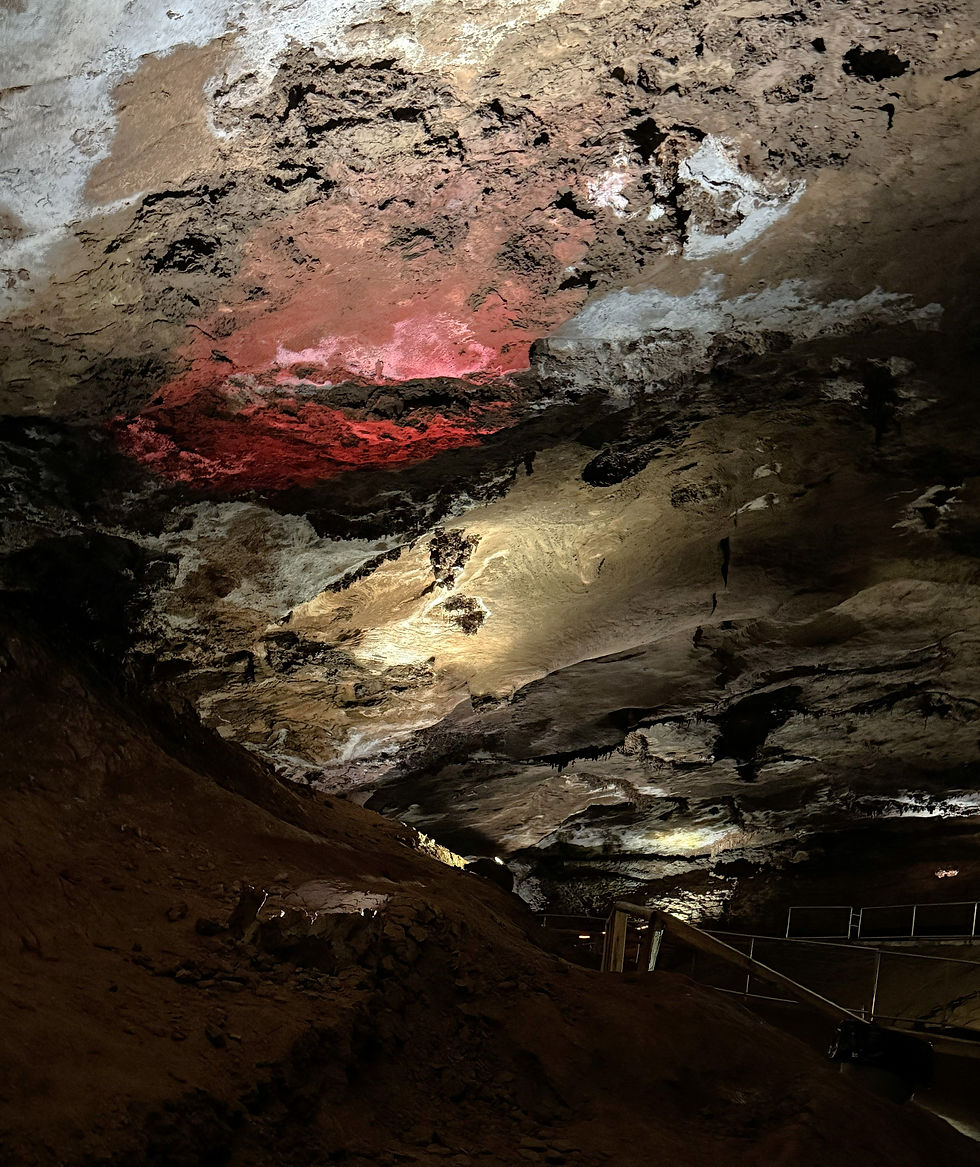
First came the caverns, named after a Cherokee Native American named Chief Craighead who owned this land in the early 1800’s. In 1905, 13-year-old Ben Sands was exploring the caverns looking for a source of water during a drought. He crawled through a small opening and found the lake, but no one took him seriously at first. By the time his father was convinced to explore with him, the water levels had risen and access to the lake lost. So, for years Billy’s story of an underground lake and water source were just that, stories. It wasn’t until much later that it was confirmed by other explorers, and since then divers from other expeditions, including National Geographic, have found an additional lake that's twice as large and more flooded chambers!
The fact that the overall depth and size of Craighead Caverns and the Lost Sea are still a mystery is not really a surprise. This is, after all, part of one of the largest cave systems in the world: 7,000 deep caves ranging from Mammoth Caves in Kentucky throughout Tennessee and into northern Alabama. If you are a spelunker or super adventurous or just want some extra time to commune with the space, you can request special tours of these caverns to explore some of the more difficult to reach areas and even stay overnight!

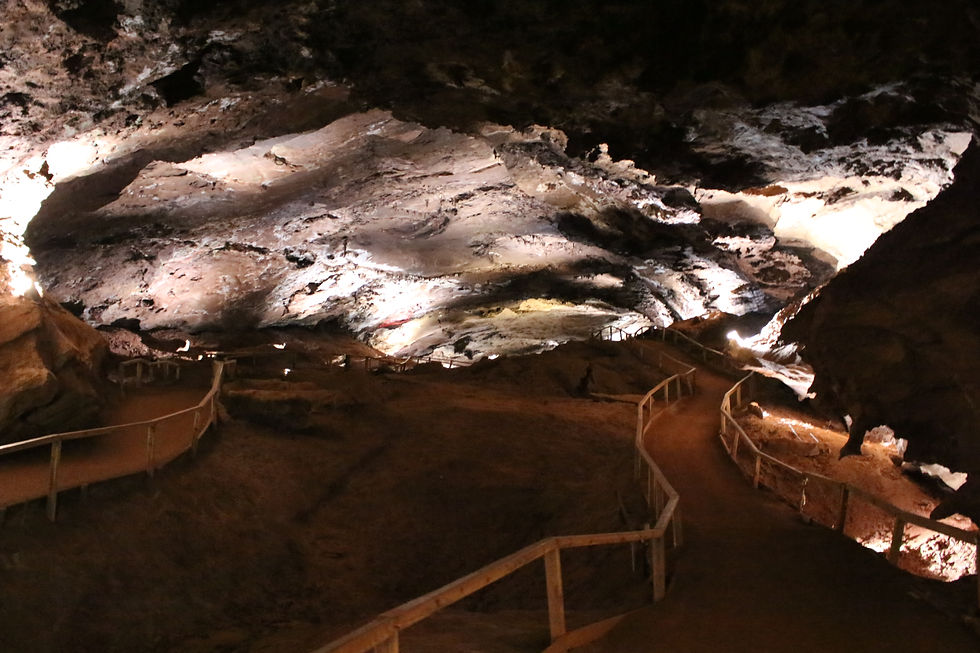
According to Archaeologist Dr. Patty Jo Watson, there are four types of cave sites: footprint caves, mortuary caves, mines and quarries, and ceremonial caves, and all four types are found in Tennessee. Craighead Caverns are ceremonial caves and have been used for mining and quarrying. We know from archaeological evidence that the Cherokee once used an area dubbed “The Council Room” for their ceremonies, which is a hike from inside the entrance. Weapons, arrowheads, pottery and jewelry have all been found there and are kept in the McClung Museum of Natural History & Culture in Knoxville.

What were Indigenous people looking for with their cave rituals? Spiritually, the caverns represent the Lower World. Caves are the perfect place to take part in vision quests to the spirit world and perform rituals and healing rites. The profound darkness is where our personal demons may dwell, but also all the ancestors who came before us and now offer us their wisdom. In these great depths we can discover gifts of revelation, mining our subconscious for lessons from the past. Stalactites, stalagmites, and the rare “cave flowers” here - crystalline structures called “anthodites” - could very well have stood for ancestors or deities. Elaborate rituals and belief systems tied around ancestor worship were practiced in Tennessee by Cherokee forefathers in what is called the Southeastern Ceremonial Complex during the Mississippian Period (1000 AD to 1600 AD), so its certainly possible cave formations played these roles.
Cool facts: Anthodites are only found in a few caves in the world, and The Lost Sea claims to have the highest concentration of them the world! There are other crystalline structures here as well, such as Travertine, Helicites with their branches that twist and grow upwards, and the rare Raft – a crystal that forms while suspended on the surface of water!

A giant stalagmite in Craighead Caverns 
Crystal formations in Craighead Caverns 
Anthodites or Cave Flowers are very rare and the Lost Sea has the most in the world!
While there is (as yet) no evidence that the caverns were used as mortuary sites like Mammoth Caves and other southern caves by prehistoric Native Americans, bones have been found in Craighead Caverns, namely a jaguar from the Pleistocene era (2.6 million to 11,700 years ago) who once lost his way in these deep, dark spaces around 20,000 years ago and plummeted to his death. (I can only imagine how terrified this jaguar must have been! Our guide turned off the lights for a few minutes during our tour, and the silence and weight of the darkness were unsettling.) The jaguar bones were discovered in 1939 and are now displayed at the Museum of Natural History in New York, but you can see plaster casts of the tracks left behind and what the jaguar’s head might have looked like in the Lost Sea Visitor’s Center. Since jaguars are sacred creatures in many indigenous cultures, a prayer of acknowledgement to him would be appropriate during your visit.

The caves also served a practical purpose: mining minerals and storing food. In fact, the first white settlers in this region used the constant 58-degree temperature to store potatoes and other foods. The caverns were probably mined by early Native Americans for chert and other minerals, and during the Civil War saltpeter (or niter) was mined here for the Confederates to use in gunpowder from 1861 to 1863. They left behind graffiti and some artifacts, but also the tale of a dastardly plot by a Union spy to blow the caves up! A diary from the time says the spy nearly succeeded, but was captured before he could detonate, and he was hung outside the cave entrance. Whether this is true or apocryphal, conscripted miner Charles W. Hicks in his Civil War Veterans Questionnaire said years later that the secret Confederate saltpeter operation was closed down in September 1863 when Federal troops came close to the area, and he and the ten people he worked with scrambled to shut down the operation and scatter to avoid capture!

Grafiti, Lost Sea, Sweetwater TN 
Remains from Confederate saltpeter mining, Lost Sea 
Artifacts in the Lost Sea visitors center 
More grafiti, the Lost Sea
Caves aren’t the only thing with mystical significance in this Lost Sea Underworld. In many cultures and traditions, water has a variety of meanings and is often considered a Sacred element that connects spiritual and physical worlds. Here are some thoughts around how the lake, stream and waterfall waters of the caverns may have been regarded by those who travelled there before us and how they may serve our needs as well. (With thanks to Meaningful Spirit, SpiritualityHealth, and What Spiritual.)
Water symbolizes life and nourishment. Without water there would be no life. Allow water to nurture your spirituality; allow it to remind you of the sacred and mystical all around you.
Water cleanses and renews. Sin, negative energy, guilt or behaviors that no longer serve you can be purified with rituals around water. What do you choose to restore in your life, what needs to be washed away?
Water reflects inner emotions and heals. When the mind is unsettled and chaotic, we think of choppy seas. If the mind is at ease and peaceful we think of calm waters. Go with the flow and release feelings for mental and emotional healing, rather than allowing them to grow to storms. Allow the waters to release any emotions that have built up inside.
Water can change its state and adapt to circumstances. By being flexible we can adjust to whatever life throws our way. Where can we change and where should we change?
Perhaps most importantly when we consider a large underground lake, we can compare the deep, still waters to our own subconscious. What does our hidden self feel about our present circumstances? Have we fallen into habits without thinking? Are we paying attention to our dreams? Are we listening to our intuition? Can we use the image of the lake in this dark environment to raise our consciousness or travel to other realms?
Ready to see the Lost Sea and Craighead Caverns for yourself? While the tour itself is around an hour and 15 minutes, plan on being there two hours or more of you’d like to explore the Visitor Center gift shop and the Lost Sea Village, which has a General Store (another gift shop), ice cream bar, glass blowing gallery, gem mine attraction and a nature trail. The tours operate at different times throughout the year, so I highly recommend calling 423-337-6616 before your trip to confirm the current hours of operation and when the tours are running. Also, the Village operates seasonally, and not all attractions may be open. Be sure to dress for the 58-degree temperatures of the caverns and know that it is a humid environment.
Also, if you have medical conditions, including mobility issues, this may not be the tour for you. You are walking 140 feet down on a ¾ mile path to the water, and some of this path is uneven and bumpy and can be hard on the knees. After the boat ride, you have to walk all the way back up, the equivalent of 14 stories, and while there are 3 rest stops, they are only for a few minutes at a time. If this raises concerns, I recommend telling the visitor’s center about your conditions before arriving and asking if this is the right tour for you.
I hope you go to the Lost Sea! Tennessee is incredibly lucky to have these beautiful caverns with a rare underground lake. Take advantage of this for a treat you will not soon forget!


Comments