

Saints, Martyrs and Miracles in Tennessee
What could be more extraordinary than a miracle? More inspiring than a martyr, willing to sacrifice one’s life for a cause? More mysterious than a figure who is able to do the impossible? History is full of people who, through great acts of love, devotion and selflessness, have achieved unthinkable heroic acts, and here in Tennessee we have some fascinating stories around Saints, Martyrs and Miracles to explore!
MARTYRS

Martyr’s Park
During the 1870’s there were several dreadful epidemics of Yellow Fever that’s struck Tennessee. Memphis was especially hard hit, so much so that in August 1878 30,000 out of 50,000 people fled the city in panic. By October the plague that acted so swiftly ravaged the remaining 20,000 people. More than 17,000 were sickened and 4,204 out of 6,000 whites, and 946 of 14,000 blacks were killed. The city lost so many people to the disease and the exodus that for a time Memphis lost its city charter and became bankrupt. Those who lived through it had the grim work of burying the dead, and there is hardly a cemetery in the city that does not reflect this tragedy. But out of heartbreak came the drive to reclaim and reimagine the city, and their hard work and vision helped Memphis flourish once again.
Today you can visit Martyrs Park, a waterfront park along the Mississippi River dedicated to the lives of all of those who were lost, and the martyrs who died caring for others.
Martyrs Park
Open · Closes 6 PM · More hours

The Martyrs Of Memphis
It was August 1873 when five Anglican Sisters of the Order of St. Mary arrived in Memphis to open a school for girls with St. Mary’s Episcopal Cathedral. But fate had other ideas: they immediately found their vows put to the test when Yellow Fever struck the community, and soon they were consumed with the tireless work of nursing the sick, feeding the poor and caring for the children in the church’s orphanage. When it seemed that things were once again in control, another epidemic struck in 1878. Again, the sisters cared for the sick and the poor. This time, however, the church would not be spared the devastation of the disease. The Reverends Parsons and Schuyler would perish, leaving the Sisters Constance, Thecla, Frances, Ruth and Hughetta and one reverend to care for the children and others. All would succumb to the disease, with only Sister Hughetta surviving.
In 1879 an altar named Constance and Her Companions was consecrated, dedicated to the Martyrs of Memphis, as the Sisters would be known, as well as the Reverends who perished. It is inscribed with Constance’s final words “Alleluia, Osanna,” and every September 9th is a holy Episcopal feast day honoring the Martyrs and their sacrifices. Sister Hughetta’s name would be added to the altar when she died in 1926, and the reredos (altar backdrop) is also a memorial to Sister Hughetta.
Today a Benedictine convent that Sister Hughetta started after leaving Memphis thrives in Sewanee, TN. The Community of St. Mary, Southern Province serves as a spiritual resource for all seekers, especially those interested in Benedictine spirituality, care for creation, and concern for the poor. They offer retreats, go for a visit!
ST. MARY’S EPISCOPAL CATHEDRAL, MEMPHIS
700 Poplar Avenue, Memphis, TN 38105
(901) 527–3361

The Korean Martyrs
A story you don’t hear much about in the US involves the Catholic people of Korea, and their deep, and extremely dangerous, commitment to their faith in their history. In the early seventeenth century “hierarchical Confucianism” was the doctrine of the Chinese who ruled Korea at the time, and the idea of Catholics gathering in one place with no class distinction was antithetical to the way hierarchy was used to rule. Christian literature was making its way into Korea from Jesuits in China, and soon educated laypeople from the Korean aristocracy were not only studying the faith, they were also spreading it. When a Chinese priest was smuggled into Korea in 1777, he found 4,000 Catholics waiting for him who had never seen a priest before! The very act of being Catholic was deeply subversive and subject to prosecution, but the Koreans were profoundly religious and would not be intimidated away from their faith. Priests came to minister the flock and would pay with their lives. In wave after wave of violence, believers would be rounded up and systematically tortured and killed. In all, more than 10,000 martyrs would die over the course of 100 years.
Of the persecutions of 1839, 1846 and 1866, the Catholic Church would beatify 79 martyrs in 1925, 24 in 1968, and 103 martyrs would be canonized by Pope John Paul II in 1984. In 2014, Servant of God Paul Yun Ji-Chung and 123 companions who were tortured and killed in 1791 were declared Venerable by Pope Frances. The church has set aside a feast day of September 20 to honor those who died so valiantly for their faith. Today, there are only seven churches in the US dedicated to the Korean martyrs, and one of them is in Nashville!
The Korean Church is unique because it was founded entirely by lay people. This fledgling Church, so young and yet so strong in faith, withstood wave after wave of fierce persecution. Thus, in less than a century, it could boast of 10,000 martyrs. The death of these martyrs became the leaven of the Church and led to today's splendid flowering of the Church in Korea. Even today their undying spirit sustains the Christians in the Church of silence in the north of this tragically divided land." - Pope John Paul II
Catholic Church of the Korean Martyrs
2319 Lebanon Pike, Nashville, 37214
(615) 678-7120

Dr. Martin Luther King, Jr.
The subject of martyrs can't truly be discussed unless it involves the late, great Dr. Martin Luther King, Jr. whose life was tragically cut short in Memphis at the Lorraine Motel. Thanks to Dr. King the events leading up to his assassination were very much in the public eye; overt racism and economic injustices were brewing a situation that was desperately careening towards violence. It was at the Mason Temple that King would give his prophetic “I’ve Been to the Mountain Top” speech, just one day before his death, foreshadowing his demise but ensuring that the fight for equity would go on without him. When that bullet cut his life short on the balcony of the Lorraine Motel, the images of Andrew Young, Ralph Abernathy, Jesse Jackson and others standing over his body would be forever imbedded into our collective consciousness. It is his death that would underscore the senseless violence towards African Americans in their fight for social justice, and perhaps that’s exactly why this motel HAD to be made into the National Civil Rights Museum.
Today, the museum is considered one of the best in the nation to learn about the pivotal work of Dr. Martin Luther King Jr. and the other Civil Rights leaders of the times. The NCRM not only brings the past to life, it also solicits the key question of why the struggle for equality and justice is still out of reach for so many. Dr. King had a precognition he would die violently but was willing to martyr himself for the greater good. If that doesn’t make this a Sacred place, I don’t know what does.
THE CIVIL RIGHTS MUSEUM, MEMPHIS
450 Mulberry St., Memphis, TN 38103
(901) 521-9699
Open Mon, Wed-Sun 9am to 5pm and closed on major holidays.
MIRACLES
According to Catholic canon law, a miracle is defined as an extraordinary event with no current medical or scientific explanation. Cases must be thoroughly investigated by local tribunals before being submitted to the Vatican for approval. In Tennessee we have a number of cases that have either been accepted as miracles or are in the process of review!

The “Miracle of Memphis”
In 1913 Mary Magdalen Hodges was living in Memphis when she was diagnosed with inoperable and terminal stomach cancer. Known as the “Miracle of Memphis,” Mary was cured of her cancer after praying to Mother Mary Euphrasia Pelletier, the French founder and Superior General of The Good Shepherd Convent order in 100 convents in 35 countries. The miracle was certified by the Vatican, and Mother Mary Euphrasia was canonized May 2, 1940 by Pope Pius XII. Saint Pelletier's feast day is April 24th, and she is interred in Angers, France in the Chapel of the Tombs. A statue of her can be seen at St. Paul's Cathedral in Vatican City. Mary Hodges lived until 1938 and became a Consecrated Resident of the Good Shepard Convent. Her grave can be found in the Calvary Cemetery in Memphis.


“Let Michael Be The Miracle”
Here’s a more recent miracle involving Father Michael McGivney, founder of the Knights of Columbus. In 2016, Daniel and Michelle Schachle of Dickson, TN were expecting their 13th child when they received a devastating diagnosis: Down syndrome in combination with fetal hydrops, a fatal combination with no chance of survival. As devoted Catholics who had been praying daily to Father McGivney for years, they asked Father McGivney to intercede so that their baby be healed of hydrops – only hydrops, as they considered Down syndrome to be a blessing. Hundreds from their church prayed with them, and the family also travelled to Fatima, one of the holiest of sites for intensive prayer. When Michelle next visited her doctor, she was told the baby showed no signs of hydrops, and the medical diagnosis was confirmed by other physicians. Today Michael McGivney is five years old and thriving despite certain conditions associated with having Down syndrome. Pope Francis recognized the miracle in 2020, opening the way for the beatification of Father McGivney and assigning the feast day of August 13th to honor his important legacy and work. He needs just one more miracle to be made a saint!

St. Martin de Porres
There is a national shrine located in Memphis dedicated to St. Martin de Porres, the Apostle of Charity.
St. Martin de Porres was born in Lima, Peru in the 16th century to a black mother and aristocratic Spanish father. He was neglected as a child, but a kindly doctor recognized his intelligence and began to teach him the healing arts at an early age. At the same time, Martin developed a deep devotion to his faith. He was accepted to the Dominican Convent of the Holy Rosary as a servant, and after many years of hard and menial tasks he was commanded to become a lay brother, a job he had felt above him. This type of humility, as well as a life of constant prayer and austerity, would define his service. He also remained committed to helping the sick and comforting them, by all accounts healing many people as a surgeon and through prayer. He also had another incredible gift: bilocation, the ability to be in more than one place at a time. Despite never leaving Lima, he was seen in Mexico, Central America and Japan, appearing at the bedside of those who were sick and needed comforting! He was also said to pass through locked doors, and there is a story where he transported himself and some novices to the church – a distance of several miles - within seconds, so that they could make their prayers on time!
Because of the miracles attributed to Martin and his incredible humility, charity and obedience, Pope John XXII made Martin a Saint on May 6, 1962. Today, you can visit the St. Martin de Porres National Shrine and Institute at historic St. Peter Catholic Church, the oldest Catholic congregation in Memphis, for prayer, service and study. There are events throughout the year, especially around the time of his feast day on November 3.
St. Peter Catholic Church and St. Martin de Porres National Shrine and Institute
190 Adams Ave. at BB King Blvd., Memphis, TN 38103
(901) 527-8282 – Church
(901) 578-2643 – National Shrine and Institute
Mon-Thurs 8am-4pm, Friday 8am-1pm

Father Patrick Ryan
Did Father Patrick Ryan know when he left Saint Mary of the Seven Sorrows church in Nashville for Chattanooga that he was being divinely directed? In 1878, the Yellow Fever that had so decimated Memphis arrived in the River City in the form of refugees – a town that had until then been fairly protected against these types of diseases because of its mountainous location. Within two days of their arrival people began to die, and a panicked city fled to the mountains, leaving behind the sick, the elderly and the poor. Suddenly, Father Ryan found himself among the selfless citizens who stayed to care for their community. He rose tirelessly to the occasion, going door to door in the poorest parts of town and sickest neighborhoods, checking in to see who needed care, giving sacraments and praying with the dying, even when he himself became ill. Within days of contracting the disease, Father Ryan would pass away.
At first the priest was buried near the Basilica of Sts. Peter and Paul, but when he was moved to nearby Mount Olive cemetery in 1886 a huge crowd lined the streets. In 2016 the Catholic Church granted Father Ryan the title Servant of God, proving that Ryan had Dedication of Service, Commitment to God’s will and had Lived Righteously. Father Ryan’s body was moved from Mt. Olive Cemetery back to the Basilica, once again drawing a large crowd of the faithful. During the memorial mass a woman named Teresa Shramko told an incredible story: her young son had fallen from a two-story window and had been critically injured, resulting in a medically induced coma. But after praying to Father Ryan for intercession, her son emerged from the coma and was learning to walk and talk again! Now only one verified miracle remains for Father Ryan to become a Saint!
The Basilica of Sts. Peter and Paul
214 E 8th St, Chattanooga, TN 37402
For tours of the Basilica, please schedule in advance by contacting the Parish office.
A virtual tour is available here also at your convenience.
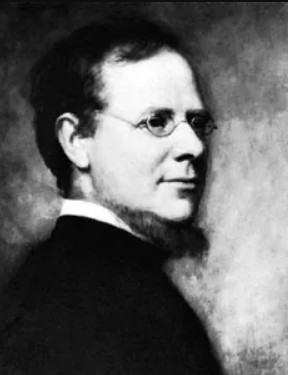
Father Isaac Thomas Hecker
In 1849, an unorthodox Roman Catholic priest with a rebellious streak named Father Isaac Hecker was expelled from the Redemptorist Order for insubordination, but with the blessing of Pope Pius IX he founded the Missionary Society of St. Paul the Apostle (now the Paulist Fathers) in New York in 1858. He wanted to convert the US to Catholicism via evangelicals and used public lectures and his publication Catholic World to spread his message. Hecker believed that the Holy Spirit must be a part of one’s life in moments big and small, and that the ideas of individual freedom, community, service, and authority could be merged with government.
Hecker was named a Servant of God in 2008 and his cause for sainthood was formally opened by Cardinal Edward Egan of New York. It seems that Archbishop Justin Rigali, who had retired to Knoxville from Philadelphia in 2011, must have spread the story of Hecker to the Knoxville area and found a receptive audience, because a medical miracle attributed to Father Hecker has supposedly occurred there! Although names and circumstances are not being disclosed, the Diocese of Knoxville has reported that doctors are being approached in order to provide medical testimony, and if this is a medical miracle with no reasonable explanation, and the person who received the miracle is convinced that it occurred through the intercession of Hecker, than this will be sent to Rome for consideration for sainthood!
Just one glance through this post will tell you: whether you are a person of faith or just need inspiration from the astonishing deeds of saints and martyrs, you don’t have to reach much further than Tennessee to find a miracle or two. There are some great Sacred Sites on this list, hope you make time to visit them and become inspired!
If you are interested in following these causes, the Diocese of Nashville and Knoxville, the Basilica of Sts. Peter and Paul in Chattanooga, and the Knights of Columbus in Tennessee are active in reporting on sainthood processes and miracle investigations.


Comments