

Chucalissa Archaeological Site, Memphis, TN
Updated: Jul 23
The C.H. Nash Museum at the Prehistoric Chucalissa Archaeological Site
1987 Indian Village Dr., Memphis, TN 38109
(901) 678-5381
Open Tuesday through Saturday 9am to 4:30pm.
Located around 10 miles south of Memphis. For best results enter into GPS “T.O. Fuller State Park” or simply “Chucalissa,” and follow signs to Chucalissa. (There aren’t many signs!)
Guided tours and special programs are available for groups of 10 or more with a reservation. To arrange a group tour, email chucalissa@memphis.edu or call 901.678.5381

Before there was Graceland or Beale Street in Memphis, TN there were ancient, Indigenous people creating their own works of art, and their land and history can be explored today in the Chucalissa Archaeological Site!
A little back story: In 1938, the Shelby Co. Negro Park, renamed the T.O. Fuller State Park, became the first state park built for use by African Americans in the US east of the Mississippi River. The Civil Conservation Corp camp was excavating for a swimming pool when it came upon the remains of a prehistoric village! This site, now adjacent to the state park, was developed as the Chucalissa Indian Village and it is one of the major prehistoric mound and plaza complexes in the area. Archaeologists consider it an important site because of the excellent preservation of architectural, floral, faunal and human osteological materials found here.
Archaeologists named the site Chucalissa, meaning “abandoned house” in Chickasaw, but this area overlooking the Yazoo Basin of the Mississippi River was once part of a thriving prehistoric people who lived prior to European contact. Evidence of settlements as far back as 8000 BC have been found here! The site was occupied, abandoned and reoccupied several times, but the largest populations were during the Walls Phase - a late Mississippian culture found in southwestern Tennessee (Shelby County) and northwestern Mississippi (DeSoto County) from approximately 1000 CE to 1550 CE. So far nine mound sites and six moundless villages have also been found in this area, all thought to be a part of the Southeastern Ceremonial Complex, meaning they were linked by mythology, ceremonies, artifacts and symbols to other sites like Moundville in Alabama and Cohokia in Illinois.
The Walls Phase poster by H. Roe 2010 
A diorama of Chucalissa at the Nash Museum 
The Southeastern Ceremonial Complex
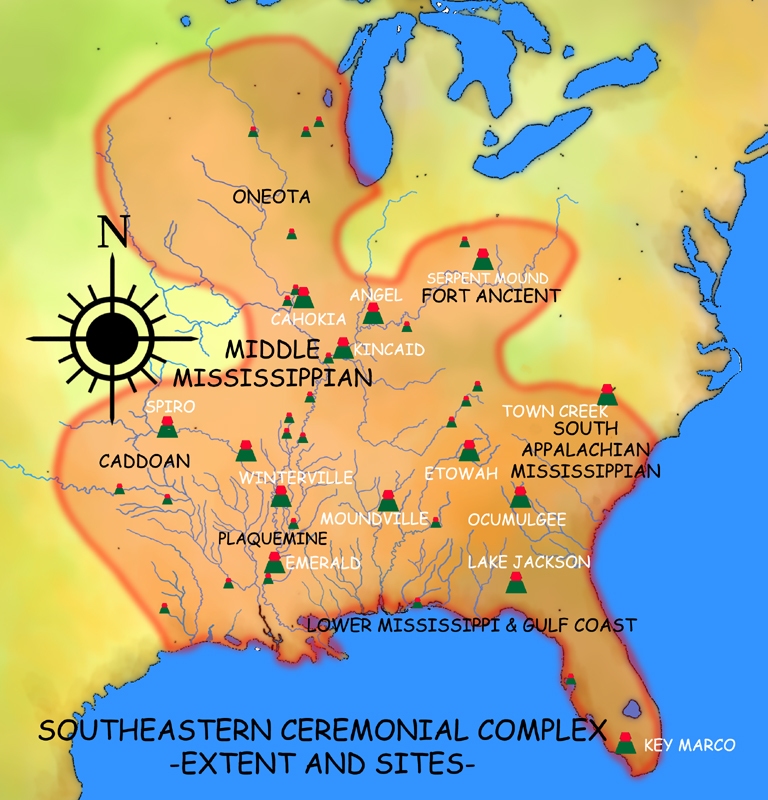
Chucalissa was the largest of the Walls Phase sites, with as many as a thousand people living there at its height, and the area was once known by the name Quiz-Quiz. Fun fact: The famous explorer Hernando De Soto’s 1540’s expedition passed right through here looking for gold. In his accounts he mentions the Province of Quizquiz and the Indigenous communities and religious rituals of those he encountered; however, it was most likely the Tunican people, not residents of Chucalissa, he met as Chucalissa was probably abandoned by the time De Soto came along due to climate change and/or warfare. It is believed that the modern Tunica, Choctaw, Chickasaw, Natchez and Quapaw who lived in this area are distinct from the people who once lived in Chucalissa and likely settled here from other regions.

A ceremonial pendant with religious motif 
An exhibit on traditional Choctaw clothing
Today, Chucalissa is run by the University of Memphis. You can visit the C.H. Nash Museum and see an extensive collection of amazingly preserved artifacts found during 40 years of excavations such as pottery, arrow points and ceramics. You can also find exhibits that explore the life and history of local prehistoric Native Americans, modern Choctaw and Chickasaw culture, and the African American community that lived nearby prior to the park’s creation. There’s also an arboretum and nature trail, and a hands-on archaeological laboratory used for training archaeologists but occasionally open to the public!
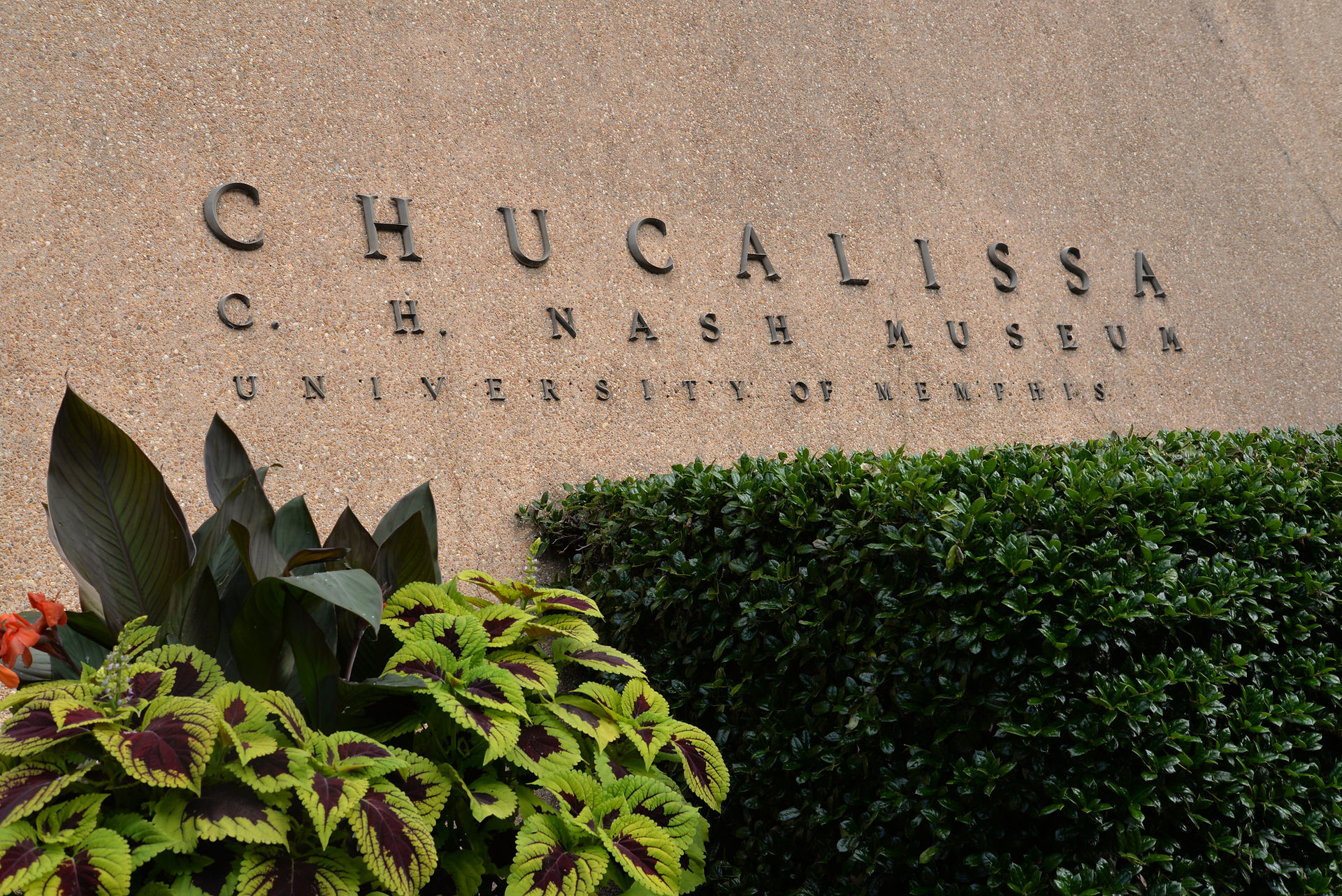
The CH Nash Museum at Chucalissa Mounds 
A towering Sycamore tree at Chucalissa Mounds 
The platform mound and an earlier, conical mound at Chucalissa
As you leave the museum through the back, huge, old trees will surround you – a greeting from the past and a window into the arboretum surrounding this park. A path will lead to two major mounds and a plaza. On the north side of the plaza is the largest mound called Chief’s Mound, which was ceremonial and residential and had structures on the top - one as large as 50 ft square found on the western half of the mound and a smaller structure on the eastern half. An earlier, more conical mound built around 1200 AD is on the southwest corner of the plaza. There were human remains found here, as well as several trophy skulls. Excavations at Chucalissa found family cemeteries with grave goods that varied widely from one cemetery to the next, but many people were buried in shallow graves near their homes or in the dirt floor of their house. I found it interesting that a number of the male remains had fronto-occipital cranial flattening like some found in Central and South America! North American links to Central and South America have been considered over the years, but it sure begs the question as to if/how this community was connected with the Indigenous much further south. Certainly, there is evidence of trade with far off communities, such as copper which probably came from the Great Lakes, conch shells from the Gulf Coast, and pottery from trade with the Natchez area, Arkansas, western Kentucky, and southeastern Missouri.
In fact, the pottery art found here is outstanding, and some fine examples can be seen in the museum from the most prolific periods of AD1200-1600. There are beautiful effigy bowls with both animal and human features, as well as serving bowls and short necked water bottles with intricate designs and punctuated patterns. Pottery often reflected the spiritual beliefs of the people, beliefs common to the Southeast Ceremonial Complex: There is an Upper World of the sky, A Middle World of the Earth, and an Under World of the water, all connected by a red and white striped pole. The pottery that was made here reflected these worlds, as well as their observations of nature. For example, animals have Sacred and powerful attributes (such as ducks and bats for the Upper Sky World); there are subjects of Middle World veneration like Earth Mother and the Hero Twins, or lines representing the four directions; and designs representing the Underworld where the Great Serpent and Underwater Panther meet souls when they die. The most decorated pottery was found among the litter of the platform mound, while everyday ware was found in the village areas, so it was the more affluent in the Chucalissa society who were able to afford the skilled work of the best potters.

A duck effigy representing the Higher World at Chucalissa Mounds 
An intricate bowl design at Chucalissa 
A water bottle found at Chucalissa Mounds
One of the features that sets this archaeological park apart from others is that, just behind the largest mound, you can visit a replica of a house from the Late Mississippian era, built with log frames, mud plastered walls, grass thatched roofs and dirt floors. It’s hard to believe that homes like this of only 20-foot square or so often housed two families, so a lot of outdoor living must have occurred! From post holes found during excavations, other homes have been estimated up to 18 ft long, and it is believed that the more important people lived around the plaza, while others lived in houses built north and south of the plaza. The outside of the replica house in Chucalissa has been painted with colorful religious symbols found in pottery at the site, and the museum itself has some splendid symbolic artwork painted on the walls.
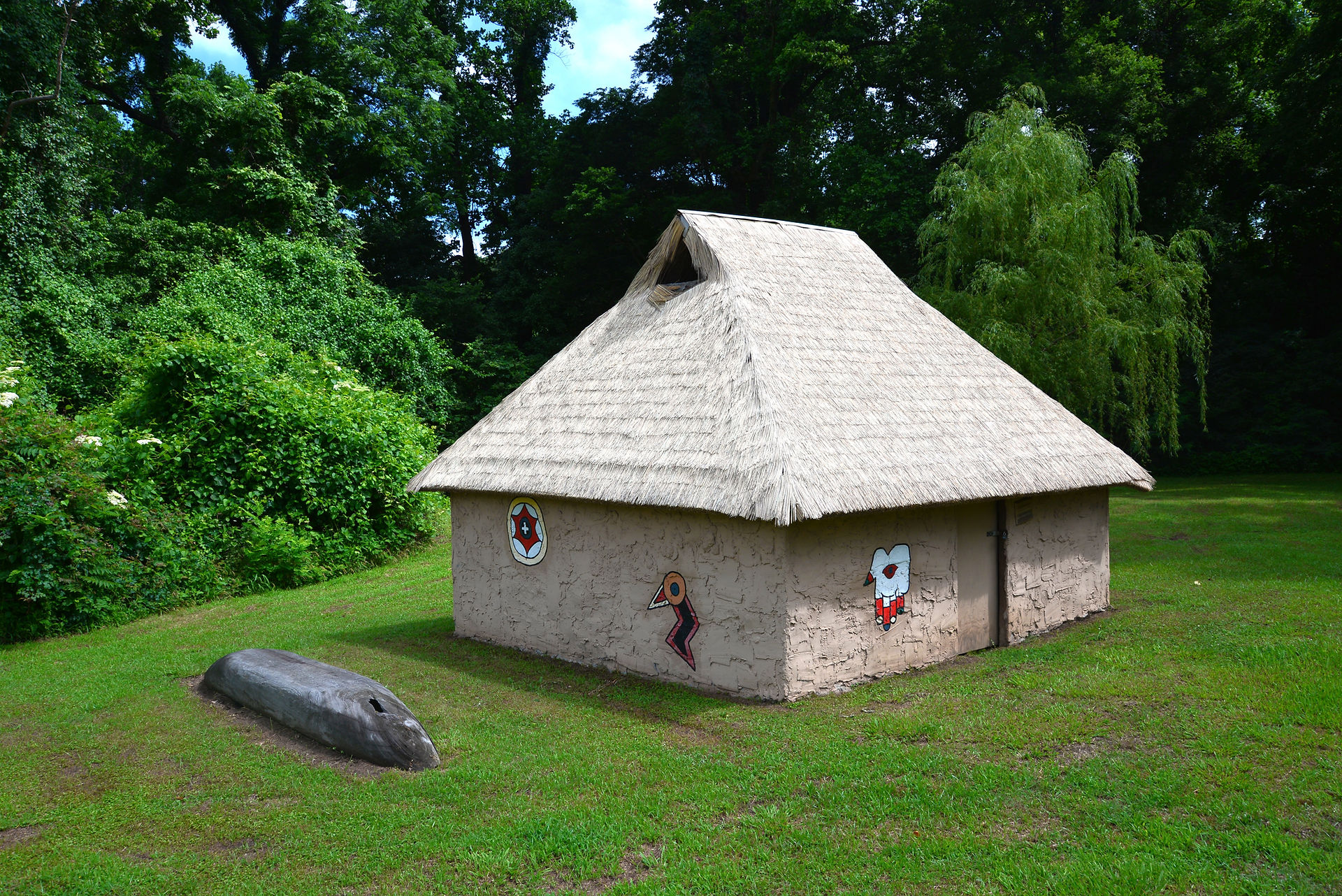
A replica of a home built during the Mississippian era at Chucalissa Mounds 
The designs on the replica house in Chucalissa are religious, found on pottery from the site
Near the replica house is the Chickasaw Bluff Hiking Trail, which leads to a section that eventually takes you to the bluff edge. Although the Mississippi River is now several miles away, this bluff once stood at the edge of the river in 1000 CE, and its height was most likely ideal to defend a settlement during warfare. In addition, the fertile soil at the bottom of the bluff was rich and perfect for the cultivation of crops such as beans, corn and squash. Today you can see a garden on the side of the mound plaza dedicated to the types of foods that would have been grown, and an indigenous herbal garden close by with plants used for medicinal and other purposes.

The Underwater Panther representing the Underworld, at Chucalissa 
The Great Serpent helped the newly deceased, a frequent image at Chucalissa
But the park is not just an homage to the past. After a ten year pause Chucalissa Mounds once again became the site of the Chucalissa Homecoming Festival in April 2026! This year's festival acted as a reunion for the Chickasaw family that once lived nearby, as well as a gathering of Chickasaw, Choctaw and other Indigenous communities. In addition to the traditional dance, ceremonies and food there was the popular game of stickball. Similar to lacrosse, it was often a traditional alternative to warfare in settling disputes. The public is invited to these events, so keep an eye on the State Parks calendar for more info on future festivals.
The Chickasaws do not have a tradition of a time when we were without belief in a supreme being, whom we call Aba’Binni’Li’ (Sitting or Dwelling Above) also called Inki Abu (Father Above) under Christian influence. There were ancient beliefs in a multitude of celestial powers. There were four “Beloved Beings” above: the clouds, the sun, the clear sky and “He that lives in the clear sky.” The Chickasaws worshipped Aba’Binni’Li’ in smoke and cloud, believing him to reside above the clouds and in the element of the holy fire. – from Chickasaw exhibit at Chucalissa museum.
Chucalissa is also an interpretive center stop along the Great River Road Scenic Byway that extends from the start of the Mississippi River in Minnesota to the Gulf Coast! For more info on this great road trip visit ExperienceMissisippiRiver.com.
Chucalissa was designated a National Historic Landmark in 1994.
To read about other archaeological parks in Tennessee visit Pinson Mounds, Mound Bottom, the Fewkes Group Mounds, Sellars Mound, Old Stone Fort and Shiloh Indian Mounds.


Really enjoyed this article - fascinating and informative.
Thank you for this wonderful update. This is going on my list of places to visit.